
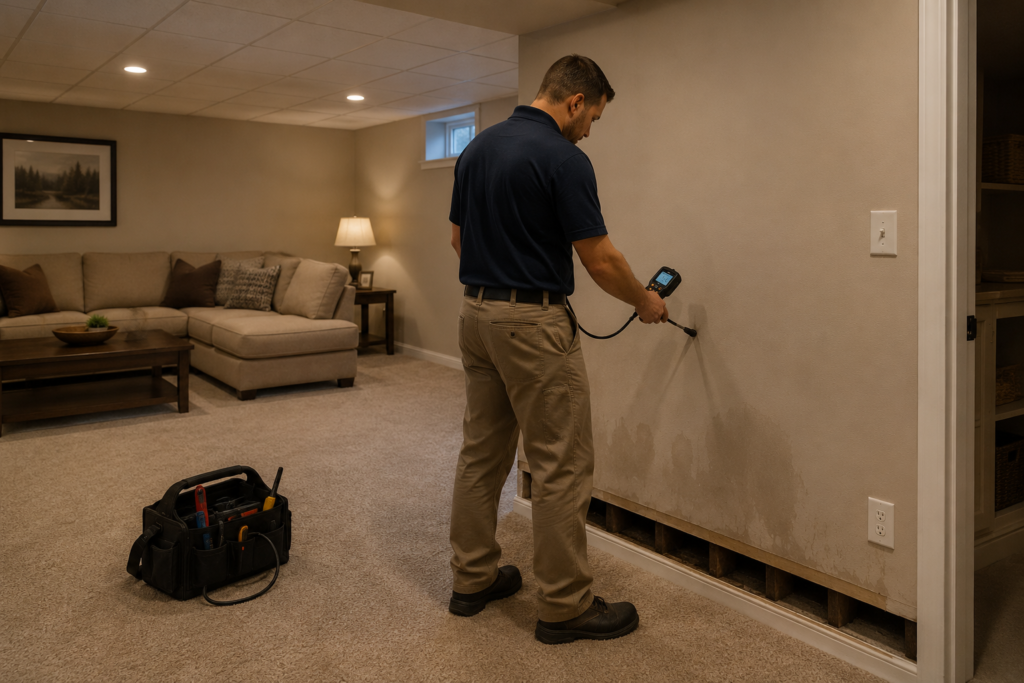
If you have never had a water damage inspection done before, the idea of a stranger walking through your home with a moisture meter can feel a little unsettling. Most homeowners call an inspector after noticing something small, a water stain near the ceiling, a musty smell in the hallway, or a spot on the carpet that never quite dries. What actually happens during the visit is far less intimidating than people expect, and knowing the process ahead of time makes it easier to get real value out of it.
How the inspection actually starts
A water damage inspection almost always begins with a conversation, not a tool. The inspector asks when you first noticed the issue, whether there was a specific event like a burst pipe or a storm, and which rooms concern you most. This matters because water rarely stays where it started. A leak from an upstairs bathroom can travel along a joist and show up as a stain on a downstairs ceiling several feet away from the actual source.
After the initial walkthrough, the inspector moves room by room, starting with the area you flagged and expanding outward. In older Boise neighborhoods, that often means checking crawl spaces and older insulation as well, since homes near areas like Dry Creek Ranch can hold moisture in places that never show a visible sign on the surface.
What tools are actually used
This is where the visit becomes more technical. A moisture meter is pressed against walls, baseboards, and flooring to measure how much water content is present compared to a dry baseline. Readings that seem fine on the surface can come back high once the meter touches drywall near the floor line, which is usually the first place water travels once it enters a wall cavity.
Many inspectors also use a thermal camera to scan larger areas quickly. It will not tell you exactly how wet something is, but it shows temperature differences that usually point to moisture sitting behind a surface. This step alone often finds problems homeowners had no idea existed, since a wall can look completely normal and still be holding water two or three feet from where the original leak occurred.
How long the whole thing takes
For a typical single-family home, expect the inspection itself to run somewhere between one and two hours. Larger homes, finished basements, or properties with more than one affected area understandably take longer. The visit usually ends with the inspector walking you through what they found in plain language, room by room, before anything is written down formally.
What you get afterward
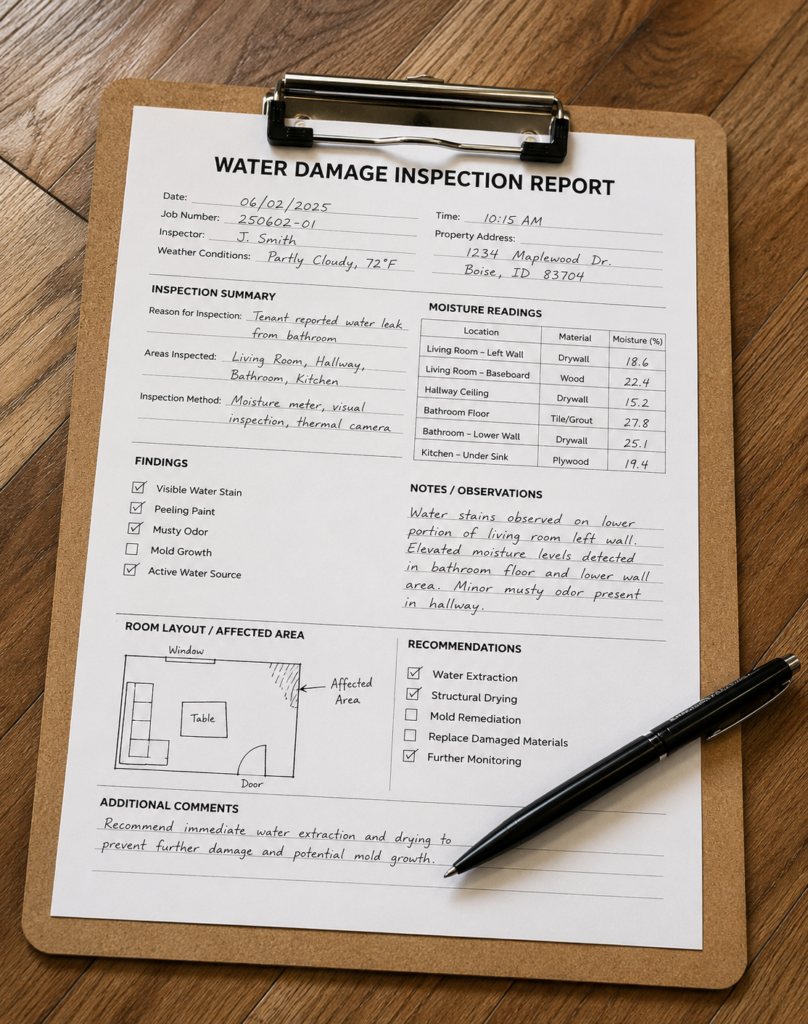
A proper inspection should leave you with more than a verbal summary. You should receive a written report that documents each area checked, the moisture readings taken, photos of anything concerning, and a clear explanation of what needs to happen next. This report becomes especially important if you are filing an insurance claim, since adjusters rely on documented readings rather than a homeowner’s description of “it felt damp.”
If the inspection turns up an active water source, such as a slow leak behind a wall or a failing sump pump, that gets flagged as the priority. If there are signs of mold starting to develop, a good inspector will point that out separately rather than folding it into the general report, since mold and standard water damage sometimes call for different next steps.
Signs it is worth scheduling one
You do not need standing water to justify calling someone. A few situations where an inspection makes sense on its own: a musty smell that will not go away no matter how much you clean, a water bill that jumped without an obvious reason, discoloration on a ceiling that has not visibly grown but has not gone away either, or simply wanting a clean bill of health after a burst pipe elsewhere in the house was already fixed.
What happens if something is found
Finding a problem during an inspection is not the same as needing a full restoration project. Sometimes the fix is as simple as sealing a gap or repairing a fixture, and the inspection report gives you the documentation to have that conversation with a plumber or contractor. Other times, if the water extraction or drying was not handled properly the first time around, the report becomes the roadmap for what a restoration crew needs to address before it becomes a mold remediation issue.
Homeowners in flood-prone pockets of the city, including neighborhoods like Boise Heights, benefit from having this kind of documentation on file even when nothing is currently wrong, simply because it creates a baseline to compare against if a storm or plumbing issue happens later. The Environmental Protection Agency’s guidance on mold after water damage is a useful outside resource if you want to understand why fast documentation and drying matter so much for indoor air quality.
Whether the concern is a single stain or a lingering smell after fixing a burst pipe, a proper inspection gives you facts instead of guesswork, and that is really the entire point of getting one done before deciding what to do next.
Most homeowners find that once they know what an inspection actually involves, the decision to schedule one feels a lot less overwhelming. If you are staring at a stain or a smell you cannot quite explain, a short conversation about what you are seeing is usually enough for someone to tell you whether it is worth a closer look.
Leave a Reply