
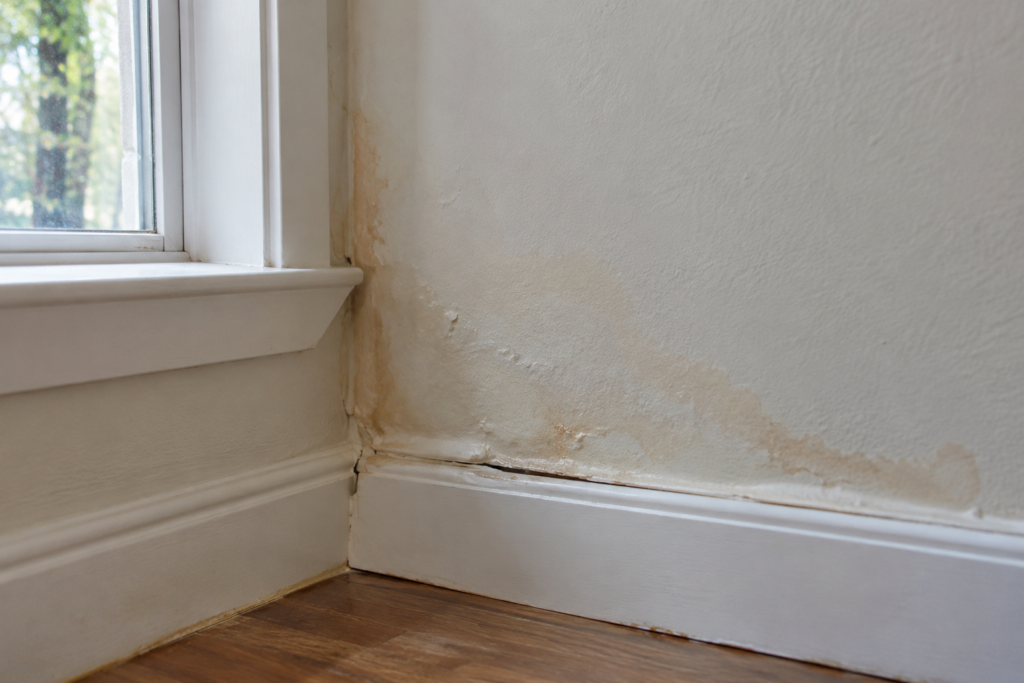
Water damage isn’t always something you can see. A wall can look completely fine on the outside, painted, dry, no stains, while moisture is quietly sitting behind the drywall or soaking into the wall cavity. That’s the tricky part about leaks. What you see on the surface and what’s actually happening inside the wall assembly can be two very different stories.
If you’ve had a leak in your Boise home recently, or you’re just noticing something “off” about a wall, here’s how to figure out whether water made it further than you think.
Signs of Possible Moisture Behind a Wall
1. Paint or Wallpaper Changes
This is usually the first thing people notice. Peeling paint, bubbling, a stain that seems to appear out of nowhere, or a patch of discoloration that wasn’t there last month. Paint and wallpaper sit right on top of the wall surface, so when moisture starts working its way through the material underneath, it shows up here first. Don’t assume it’s just old paint failing, especially if it’s a new spot.
2. Swollen or Soft Drywall
Press gently on the wall (lightly, not a full-on poke) and see how it feels. Drywall that’s absorbed water tends to go soft, spongy, or slightly warped. Sometimes you’ll notice a section that looks like it’s bowing outward compared to the rest of the wall. Once drywall gets saturated, it loses its structural integrity fast, which is part of why this sign shouldn’t be ignored.
3. Musty or Damp Odor
A persistent musty smell is one of those signs people brush off for way too long. If a wall or a corner of a room smells “off,” particularly after a leak, a storm, or an appliance overflow, it’s worth investigating rather than just running an air freshener and hoping it goes away.
4. Baseboard or Trim Changes
Water travels downward, so baseboards and trim near the floor are often where hidden moisture shows up before anything else does. Watch for swelling, separation from the wall, staining, or trim that feels soft or starts to warp. This is a strong indicator that water has reached lower sections of the wall, even if the drywall higher up still looks normal.
5. Flooring Around the Wall Looks Different
Cupping or swelling in hardwood, staining in carpet, or flooring that just looks different near a particular wall can point to water that traveled beyond where it was originally noticed. If you had, say, a washing machine overflow or a slow leak near a bathroom wall, moisture can migrate quite a bit further than the original spill, especially along subfloor and baseboards.
Can You Tell Just by Touching the Wall?
Not reliably, no. Touch and appearance give you clues, but they can’t tell you how much moisture is actually sitting inside the wall assembly, or how deep it’s gone. A wall can feel dry to the touch on the surface while the insulation and framing behind it are still wet. That’s the whole problem with hidden moisture: it hides.
This is where actual moisture inspection tools come in. Equipment like moisture meters and thermal imaging can show what’s happening inside a wall without opening it up, which gives a much clearer picture than guessing based on how a wall feels.
What Should You Do After Finding Possible Hidden Moisture?
If there’s still an active leak, deal with the source first, but only if it’s safe to do so. Shut off the water if you can. After that, take photos of anything you’re noticing: stains, soft spots, discoloration, swollen trim. This documentation matters, especially if you end up filing an insurance claim later.
One thing to avoid: don’t start cutting into walls yourself. Opening up drywall without knowing what’s behind it (wiring, structural elements, etc.) can turn a moisture problem into a safety hazard. If a leak has affected a wall, ceiling, or floor, getting a proper water damage inspection is the safer route to actually find out where the moisture is and how far it’s spread.
Why Hidden Moisture Matters
Here’s the thing people get wrong most often: removing standing water or drying the visible surface doesn’t mean the wall is actually dry. Moisture likes to hang around inside building materials, insulation, and framing, areas you can’t just look at and know for sure.
So the real question after any leak isn’t just “does this look dry now?” It’s “could there still be moisture somewhere I can’t see?” That second question is the one that actually protects your home, because materials that stay damp for too long are exactly what leads to mold growth from water leaks, warped framing, and structural problems down the line.
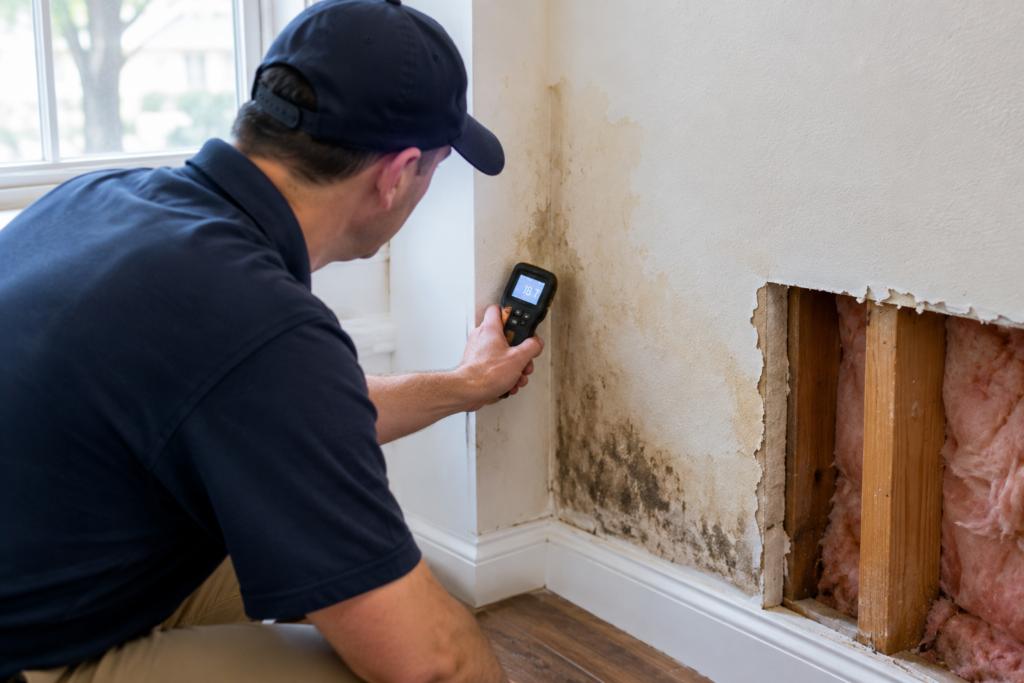
According to the EPA’s guide on mold and moisture control, damp materials that aren’t dried within 24 to 48 hours create the right conditions for mold to start growing, which is exactly why catching hidden moisture early makes such a difference.
If you’re dealing with a leak that may have reached behind a wall in your home, and you’re not sure how far it traveled, a proper moisture inspection is really the only way to know for certain. Boise homes, especially in older neighborhoods, often have wall cavities and crawl spaces that hold onto moisture longer than people expect, so it’s always worth checking rather than assuming everything dried out on its own.
Leave a Reply