
You walk into the kitchen at 6 a.m. and your socks are already wet. Maybe it’s a burst supply line under the sink, maybe the water heater finally gave up, or maybe the spring melt found a way through your basement wall. Whatever the cause, the next two days matter more than most homeowners realize.
Most people lose valuable time because they don’t know what to do first. They mop, they wait, they call three friends, and by the time someone with equipment shows up, the water has already crept into the subfloor. This guide walks you through what proper water extraction in Boise looks like, what you can safely do yourself, and how to avoid the mistakes that turn a manageable cleanup into a five-figure repair.
Why the First 48 Hours Decide Everything
Water doesn’t stay where it lands. It wicks upward into drywall, seeps under baseboards, and travels along floor joists. According to the U.S. Environmental Protection Agency, drying water-damaged areas and items within 24–48 hours is the key to preventing mold growth in most cases. That window is not a suggestion. It is the line between a dry-out and a remediation project.
Here in the Treasure Valley, we deal with a few things that make this window even tighter. Older homes in the North End and Boise Bench often have crawl spaces that hold moisture, and spring runoff from the Boise River can push groundwater against foundations that were never built for it. If you’d like to understand why our local weather plays such a big role, this breakdown of rainfall and snowfall patterns in Boise, Idaho is worth a read.
What Water Extraction Actually Means
People often use “cleanup” and “extraction” like they’re the same thing. They aren’t. Extraction is the first, most urgent step: physically removing standing and pooled water before anything else can happen.
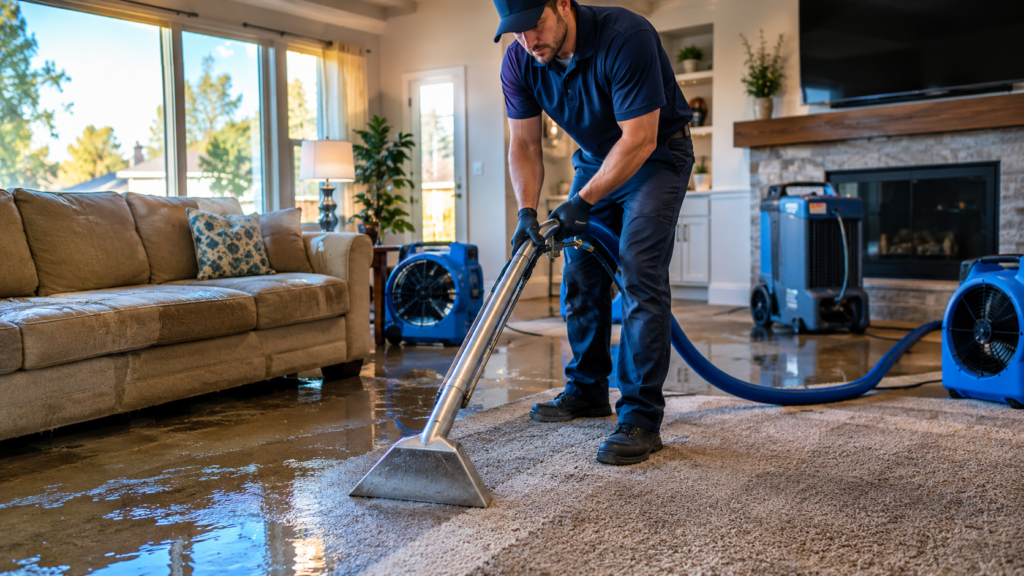
Professional crews use truck-mounted or portable extractors, submersible pumps, and weighted extraction tools that pull water out of carpet, padding, and even hardwood cracks. A wet-dry vacuum from the hardware store can’t come close. It removes surface water but leaves gallons trapped in the padding underneath. That trapped water is what breeds mold and warps floors later.
When a licensed team handles emergency water damage restoration in Boise, extraction is always step one, followed by moisture mapping and structural drying.
Step-by-Step: The First 48 Hours
Hour 0-1: Make It Safe
Before you touch anything, think about safety. If water is near outlets, appliances, or your electrical panel, shut off power to that area at the breaker. Never step into standing water if you suspect it’s reached anything electrical. If the source is a broken pipe, shut off your main water valve right away.
Hour 1-4: Stop the Source and Document
Find and stop the source if you can. Then take photos and video before you move a single thing. Your insurance adjuster will want to see the original condition, so wide shots and close-ups both matter. Write down what got wet, roughly when it started, and what you’ve done since.
Hour 4-12: Call the Professionals
This is where many homeowners hesitate, hoping a fan and a few towels will do the trick. For anything beyond a small spill, it won’t. A reliable water damage cleanup team in Boise will bring commercial extractors and air movers that dry materials evenly, not just the surface.
If the damage came from a supply line or pipe failure, our guide on burst pipe water cleanup in Boise explains exactly how that specific situation gets handled.
Hour 12-24: Extraction and Moisture Mapping
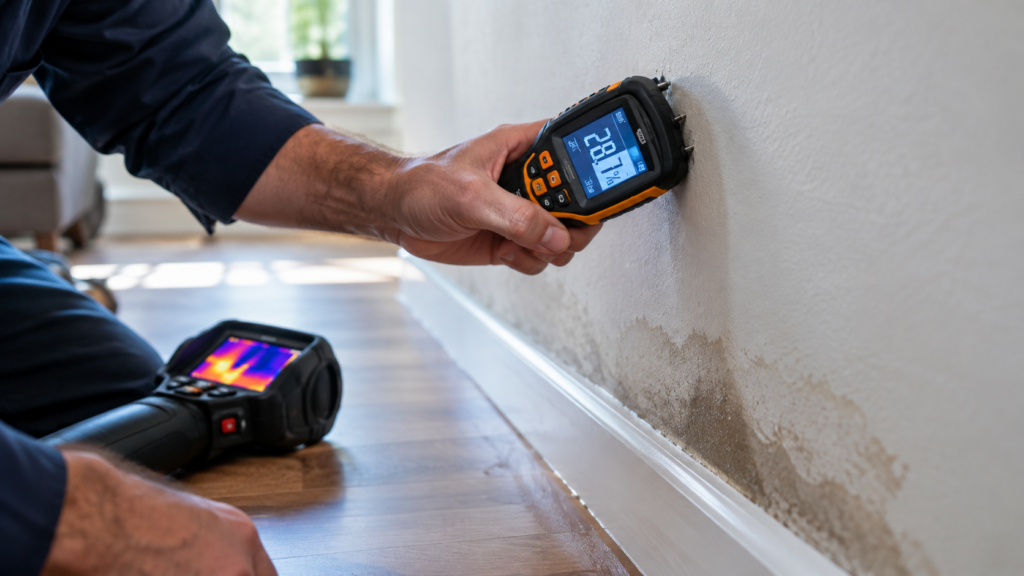
Once the crew arrives, extraction begins. After the bulk water is out, technicians use moisture meters and thermal cameras to find water hiding inside walls and under flooring. This mapping step is what separates a real restoration company from someone who just runs a fan. If you’re curious how this works, here’s what to expect during a water damage inspection in Boise.
Hour 24-48: Structural Drying and Dehumidification
Now the slow, quiet work begins. Air movers and dehumidifiers run continuously, pulling moisture out of framing, drywall, and subfloors. Technicians return daily to check readings and adjust equipment. Skipping this stage is the single most common reason mold shows up weeks later.
Common Mistakes That Cost Boise Homeowners Thousands
Waiting to see if it dries on its own : Idaho’s dry climate fools people. The surface may feel dry, but the wall cavity behind it stays damp for days.
Using household fans only: They move air but don’t remove moisture. Without dehumidification, you’re just circulating humid air around your house.
Ignoring the ceiling: Water travels. A bathroom leak upstairs can saturate the ceiling below without leaving obvious stains at first. If you notice discoloration, read up on ceiling water damage repair in Boise before it sags.
Assuming clear water is always safe: Water from a broken supply line starts clean, but it can turn contaminated within 48 hours as bacteria multiply. Sewage or river water is contaminated from the start, and that’s a job for trained crews only.
When Mold Becomes the Next Problem
If water sits too long, mold usually follows. Once it takes hold, extraction alone isn’t enough. You’ll need containment, removal, and clearance testing. Understanding mold removal after water damage in Boise helps you recognize the warning signs, such as a musty smell, dark spotting, or warped baseboards, so you can act early.
What Proper Water Extraction Costs and What Affects It
Every job is different, but a few factors drive the price. The amount of standing water, how long it sat, the type of water involved, and the materials it touched all matter. A quick extraction on tile costs far less than pulling water out of carpet, padding, and hardwood after a two-day delay. Acting quickly is almost always the cheapest option.
Most reputable companies also work directly with your insurance provider. Documenting everything early, like we mentioned above, makes that process much smoother.
How to Choose the Right Company
Not every company that shows up with a fan is qualified to do this work. Before you sign anything, ask these questions:
- Are they licensed and insured in Idaho?
- Do they respond around the clock, including weekends?
- Will they use moisture meters and document drying progress?
- Do they handle insurance paperwork?
If you’d like to see who we are and how we work, our about us page covers our team and approach. And if you’d rather talk to a real person right now, you can contact our Boise team anytime.
Final Thoughts
Water damage feels overwhelming, but the first 48 hours are the one stretch where your choices carry the most weight. Stay safe, stop the source, document everything, and get professional extraction started as early as you can. Doing that protects your home, your health, and your wallet.
If you’re dealing with standing water right now, don’t wait for it to get worse. Fast action is the difference between a dry-out and a rebuild.
Leave a Reply