
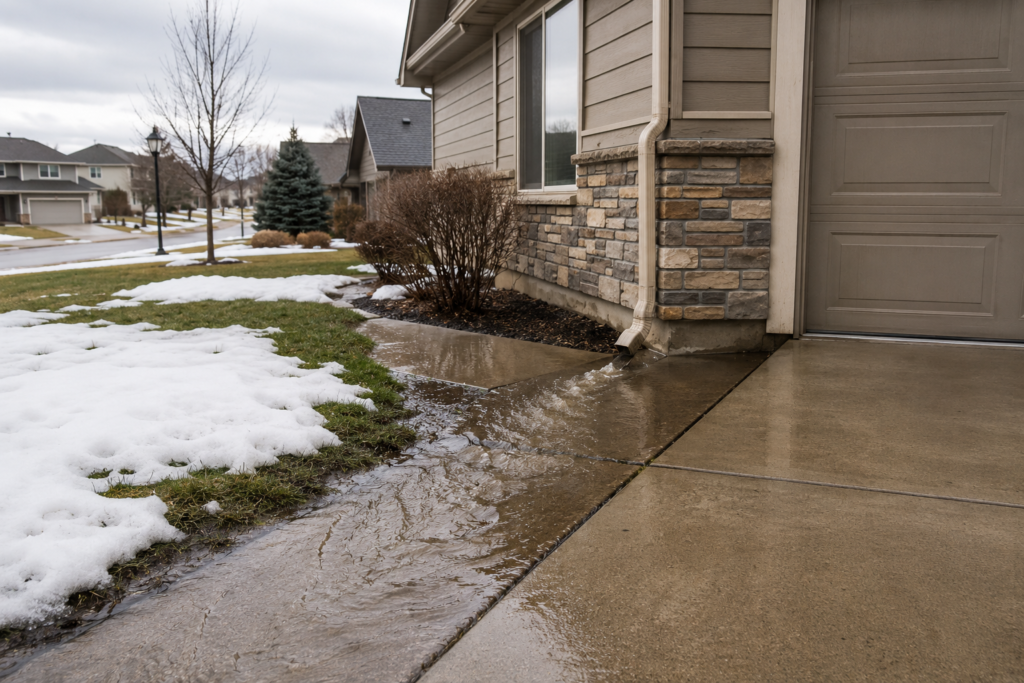
Boise gets only about 11 to 12 inches of precipitation in a typical year, which sounds like very little until you see where it lands: a few snowy weeks in winter, a fast spring thaw and the occasional summer downpour that dry ground cannot absorb.
That mix is why water damage here tends to follow the calendar. This guide covers how much rain and snow Boise actually gets, which season puts which part of your home at risk, and what you can do before each one.
How Boise’s Precipitation Patterns Break Down by Season
Boise is a semi-arid city, and most of its moisture arrives in winter and spring. According to NOAA’s 1991–2020 climate normals for the Boise Airport, the year breaks down roughly like this:
| Season | Precipitation (inches) | Snowfall (inches) |
|---|---|---|
| Winter (Dec–Feb) | about 3.9 | about 14 |
| Spring (Mar–May) | about 4.0 | about 1 |
| Summer (Jun–Aug) | about 1.2 | none |
| Fall (Sep–Nov) | about 2.4 | about 2 |
December and January are the snowiest months, while July and August are the driest, each averaging around 0.2 inches. Snowfall also swings a lot from year to year, depending on the storm track.
These patterns are not uniform across the valley. Elevation and local terrain both play a role, and neighborhoods on sloped ground tend to see more snowmelt runoff than flatter areas nearby.
Spring Thaw: March through May combines rapid snowmelt with seasonal rain, which is one of the more common triggers for water intrusion in low-lying properties. When frozen ground can’t absorb runoff fast enough, water looks for the path of least resistance – often straight toward a foundation.
Summer Thunderstorms: Summer is the driest season, but a short, intense downpour can still drop a lot of rain in a very short window. When drainage systems are not designed for that volume, localized flash flooding can follow, and in some cases the water ends up inside a home and calls for emergency storm cleanup.
Winter Snowpack: Heavy accumulation creates ice dam risk on rooflines, which is one of the more common causes of interior leaks during the colder months. Meltwater gets forced backward under roofing material instead of draining off the edge.
Fall Rains: Steady autumn drizzle saturates soil over time, which can gradually weaken foundation stability if drainage isn’t managed well throughout the season.
For homeowners who want to track current conditions and seasonal outlooks, the National Weather Service Boise office provides local forecast data and seasonal climate summaries specific to the Treasure Valley.
Why Poor Drainage Makes Every Season Riskier
Properties with inadequate drainage tend to see the most water-related issues across all four seasons, regardless of which specific weather pattern is driving it.
Snowmelt overwhelming gutters, water pooling against a foundation, or soil holding moisture longer than it should all trace back to the same root issue – water isn’t being directed away from the structure effectively.
Soil matters too. Parts of the Boise area have soils that drain slowly, and when water sits against a foundation for days instead of soaking away, the risk goes up. A quick way to learn more about your own lot is to watch how it drains after a heavy rain.
This is part of why a foundation waterproofing assessment is worth considering for older homes, particularly those that have seen recurring dampness along a foundation wall after a wet season.
Practical Steps for Each Season
Year-Round Drainage Maintenance: Clearing gutters at least twice a year – before winter and again in spring – helps prevent overflow that directs water toward walls and foundations instead of away from them.
Downspout extensions that carry water several feet from the foundation matter more in Boise than in some climates, given how freeze-thaw cycles here can crack concrete over time if water repeatedly pools in the same spot.
Roof and Attic Checks: Inspecting for ice dam formation during snowy months, and addressing insulation gaps that contribute to uneven roof-surface temperatures, reduces the risk of meltwater forcing its way under shingles.
A roof leak repair and water damage mitigation approach that addresses both the leak and any resulting interior moisture prevents a small ice dam issue from turning into attic insulation or ceiling damage.
Basement and Crawlspace Protection: In wetter seasons, groundwater can rise around below-grade spaces, which makes basements and crawlspaces more vulnerable.
An emergency sump pump installation or repair gives below-grade spaces a way to handle rising groundwater before it becomes standing water inside the home.
For crawlspaces specifically, proper crawlspace water extraction addresses the tighter, harder-to-reach conditions found under a house, which standard equipment sized for living spaces doesn’t always handle well.
Sealing Entry Points: Caulking windows and doors annually helps keep wind-driven moisture from working its way indoors, particularly relevant given how much wind can accompany Boise’s seasonal weather shifts.
Grading Checks: A simple way to test how well your property sheds water is to run a hose near the foundation and watch how quickly it drains.
If water pools within a short distance of the foundation rather than moving away, regrading can prevent the kind of slow erosion that eventually leads to structural issues.
Smart Monitoring: Moisture sensors placed in crawlspaces can flag a developing leak early, often well before it becomes visible anywhere inside the living space.
Considerations for Businesses and Larger Properties
Businesses, particularly those with warehouse or storage space, face their own version of this risk during Boise’s storm season.
Elevating stored inventory and using physical barriers ahead of predicted heavy weather reduces exposure significantly. For properties that have already experienced flooding, commercial water damage restoration addresses the scale and logistics that commercial spaces require, which differs meaningfully from residential water damage response.
Common Mistakes That Make Boise’s Weather Patterns Worse
A few recurring mistakes show up often in homes affected by seasonal water damage. Neglecting seasonal gutter maintenance is one of the most common – clogged gutters after autumn leaf-drop cause overflow during the next rain event, directing water toward walls instead of away from them.
Ignoring snow accumulation on a roof is another frequent issue. Waiting for snow to melt naturally sounds reasonable, but it often allows ice dams to form, forcing water under shingles and into attic spaces.
Left unaddressed, trapped moisture in attic insulation can lead to wet insulation removal and replacement becoming necessary well after the original storm has passed.
Soil saturation is easy to overlook as well. Slow-draining soil holds water, and repeated rain without proper grading can lead to slow basement seepage that isn’t always obvious until flooded basement cleanup becomes necessary.
A water damage inspection after any unusually wet season can catch this kind of slow intrusion before it becomes a larger structural concern.
Finally, dampness that goes unaddressed for an extended period creates mold risk, particularly in areas with limited airflow like crawlspaces or basements.
A mold inspection and testing after any significant water event gives a clear answer rather than leaving it to guesswork. And once materials have been affected, thorough structural drying and dehumidification is what actually prevents long-term structural or mold issues, rather than surface-level drying alone.
Staying Ahead of Boise’s Seasonal Patterns
Boise’s rainfall and snowfall patterns each bring a distinct set of risks, but the underlying principle stays consistent across all of them: drainage, maintenance, and early detection make the difference between a minor seasonal adjustment and a costly repair.
Understanding which season poses which specific risk – spring runoff, summer flash flooding, winter ice dams, or fall soil saturation – helps homeowners direct their preventive efforts where they matter most, rather than treating every season the same way.
Frequently Asked Questions About Boise Rain and Snow
How much rain does Boise get per year?
About 11 to 12 inches of precipitation in a typical year, counting both rain and melted snow, according to NOAA normals for the Boise Airport.
How much snow does Boise get?
Roughly 18 to 20 inches in an average winter, though totals vary a lot from year to year.
What is the snowiest month in Boise?
December and January, each averaging around 5 to 6 inches.
When is water damage most likely in Boise?
Late winter and spring are the main risk, when snowmelt and rain fall on frozen or saturated ground that cannot absorb them. Winter ice dams and summer thunderstorms are the other two common triggers.
Do ice dams form in Boise?
Yes, when snow builds up on a roof and uneven roof temperatures cause meltwater to refreeze at the edge, trapping water behind it.
Leave a Reply