
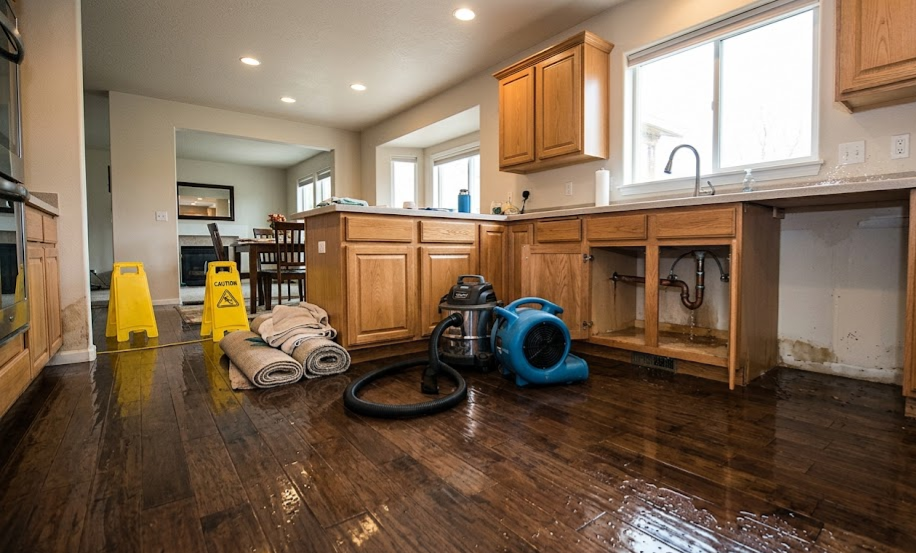
A pipe bursts, usually at the worst possible time. Maybe it is a cold January morning and you hear water running behind a wall, or you come home from work to a soaked hallway. Either way, the next hour matters more than the next week. This guide covers what to do in those first minutes, how burst pipe repair differs from water cleanup, and what homeowners in Boise tend to overlook. It was put together by the Boise Water Damage team from the kinds of calls we see every winter.
Why Pipes Burst in Boise Homes
Boise winters swing from mild afternoons to hard overnight freezes, and that swing is rough on plumbing. Water expands as it freezes, and the pressure builds inside the pipe until a weak spot gives. Interestingly, the pipe often splits where the ice formed, but the leak only shows up once things thaw and water starts moving again. That is why many homeowners find a burst pipe in Boise a day or two after the cold snap, not during it.
The usual trouble spots are pipes in garages, crawl spaces, exterior walls and unheated utility rooms. Older homes in neighborhoods like Glenwood Rim tend to have older copper or galvanized lines, and newer builds around Hidden Springs can have long runs of plumbing in exposed spaces. Corrosion, high water pressure and a failed fitting can also split a pipe with no freeze at all.
What to Do in the First 15 Minutes
1. Shut off the water. Find the main shutoff valve, usually where the water line enters the house. Common spots are a basement, crawl space, garage or utility room, often near the water heater. If you cannot find it, there is also a shutoff at the street-side meter box. Turn it fully closed, then open a faucet on the lowest floor to drain what is left in the lines.
2. Think about electricity before you step in water. Water and outlets, power strips and appliances do not mix. If water is near electrical equipment, stay out of it and have the power turned off by someone who can do it safely. FEMA’s guidance for flooded homes says the same: do not touch electrical equipment while standing in water.
3. Take photos and video before you clean. Get wide shots of each affected room and close-ups of the damaged pipe, soaked walls, flooring and belongings. Your insurance company will want this, and it is far easier to record it now than to explain it later.
4. Move what you can. Lift small furniture, rugs, electronics and documents to a dry area. Do not try to carry heavy, waterlogged items, since wet carpet and furniture can weigh far more than you expect.
5. Start removing standing water if it is small. A wet-dry vacuum and towels work for a minor spill. For anything larger, extraction needs stronger equipment, and speed matters because mold can start growing within 24 to 48 hours in damp materials.
Burst Pipe Repair vs. Water Cleanup: Two Different Jobs
This is the part many people mix up. Fixing the pipe and fixing the water damage are separate jobs, usually done by different people.
A licensed plumber handles burst pipe repair in Boise: cutting out the split section, replacing the pipe or fitting, and checking the rest of the line. That stops the leak for good. It does nothing, however, for the water that already soaked into your floors, drywall and insulation.
That is where water mitigation comes in. Water mitigation in Boise means removing the water, drying the structure with air movers and dehumidifiers, and monitoring moisture until the materials are actually dry. Professional burst pipe water cleanup also checks for water that traveled out of sight. A burst pipe in an upstairs wall, for example, can send water down through the ceiling below, which is why a ceiling water damage repair job sometimes follows what looked like a simple plumbing problem.
If you are not sure where the water went, leak tracing helps. Some homes have slow leaks behind walls long before anything bursts, and leak detection services can find those before they turn into a bigger event.
Hidden Damage Homeowners Often Miss
The wet carpet is obvious. These are not:
- Wall cavities and insulation. Water runs down inside walls and sits there. Wet insulation holds moisture for a long time.
- Subfloors and under flooring. Laminate and hardwood can look fine on top while the layer underneath stays damp.
- Crawl spaces and basements. In homes around North End East, water that leaks into a crawl space may sit unnoticed for days. If it reaches a lower level, the problem becomes closer to flooded basement cleanup than a simple leak.
- Slab-level moisture. Homes built on slabs, such as many near Wood Duck Island, can have water spreading along the slab where you cannot see it.
A moisture meter is the only reliable way to tell whether a surface that feels dry actually is. Drying usually takes several days, not hours, and rushing the end of the process is how musty smells and mold show up weeks later.
Water Category Matters
Not all water is equal. A pipe that bursts on a clean supply line starts out as clean water, but it can pick up contamination as it sits and soaks through dirty materials. If the water came from a drain or sewer line instead, it is a different situation entirely and needs different handling. In that case, read up on sewage backup cleanup before touching anything, since contaminated water is a health risk.
How to Prevent the Next Burst Pipe
Most prevention is cheap and boring, which is exactly why it works:
- Insulate pipes in garages, crawl spaces and exterior walls, especially in areas like Garden City East Chinden where older homes may have exposed lines.
- Keep the heat on during a hard freeze, even if you are traveling. A low steady temperature is better than shutting the furnace off.
- Let a faucet drip on the coldest nights. Moving water is slower to freeze.
- Disconnect and drain outdoor hoses before winter, and know exactly where your main shutoff valve is before you need it.
Common Questions
Can I stay in the house after a pipe bursts?
Often yes, as long as the water is off, electrical hazards are controlled and there is no sewage involved. If a lot of water got in, check for sagging ceilings or soaked outlets before using those areas.
Will insurance cover a burst pipe?
Many homeowner policies cover sudden water damage, but not gradual leaks or neglected maintenance. Read your policy and talk to your insurer early, and keep your photos and receipts together.
How long does drying take?
It depends on how much water got in and what it soaked into. Plan on days rather than hours, and rely on moisture readings, not on whether the surface feels dry.
Is a burst pipe repair enough?
Not usually. Repair stops the leak, but any water that already soaked into the structure still has to be dried out.
Leave a Reply