Serving Homeowners in Veterans Park
In Veterans Park, the water that does the most damage is often the water nobody notices: a slow rise in groundwater along a foundation wall, a sprinkler line that quietly soaks a basement wall, a pipe that splits overnight in an unheated garage.
If you are dealing with water damage in Veterans Park, Boise Water Damage provides 24-hour water restoration with extraction, structural drying and repair coordination. Veterans Park is an established neighborhood with mature trees and a location close to the Boise River, and those features shape how water finds its way into homes here, especially during heavy spring snowmelt or a sudden summer thunderstorm.
Why Veterans Park Homes Face Specific Water Damage Risks
Homes in this neighborhood were largely built before modern drainage standards were common, which means older storm drainage systems sometimes struggle to keep up during intense rain events.
Irrigation can add another source of water. A failed valve, a broken sprinkler line or an overflowing ditch during peak watering season can send water toward a foundation without any obvious flood, and that kind of slow intrusion is easy to miss until it has reached framing or flooring.
Proximity to the Boise River adds a further consideration. Homes closer to the riverfront can see foundation moisture rise during high water periods, even without a direct flood event, since groundwater levels shift along with the river.
This slow, seasonal moisture change is different from a sudden pipe burst and easy to miss until it’s already affected framing or flooring.
Freeze-Thaw Cycles and Winter-Related Water Damage
Idaho’s freeze-thaw cycles are a major factor in Veterans Park, particularly for homes with attached garages and basements exposed to temperature swings.
Pipes that run through unheated or poorly insulated spaces are more vulnerable to freezing and bursting during a hard freeze, and the resulting water release can be significant before anyone notices.
North-facing rooflines are also worth watching during winter, since ice dams can form and force meltwater back under roofing material rather than off the edge, leading to ceiling leaks that show up well after the storm has passed.
Water Extraction and Drying: The First Response
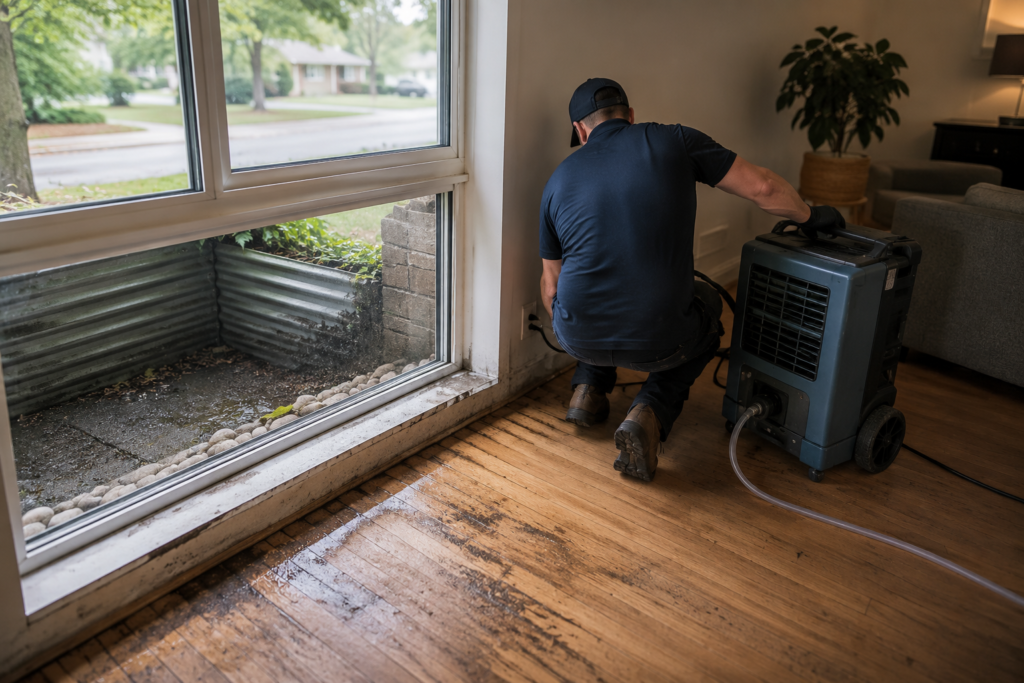
Once water has entered a home, removing it quickly is what limits the scope of the damage. Emergency water extraction uses industrial pumps to clear standing water fast, which matters most in the first few hours after a leak, overflow, or burst pipe is discovered.
Slow-draining soil can hold moisture close to the ground, which means extraction alone isn’t always enough. The surrounding soil and foundation area sometimes need attention too.
Structural Drying for Older Home Construction
Many Veterans Park homes feature hardwood flooring and older framing techniques that respond differently to moisture than modern construction.
Structural drying and dehumidification brings walls, subfloors, and framing back to a safe moisture level over several days, with regular moisture readings confirming the space has actually dried rather than just appearing dry on the surface.
Skipping this step, or cutting it short, is one of the more common reasons water damage resurfaces weeks later as warped flooring or a mold problem.
Basement and Crawlspace Considerations
Basements are common in this neighborhood and vulnerable to the same freeze-thaw and groundwater pressures affecting the rest of the property.
A flooded basement cleanup approach that accounts for below-grade drying challenges – rather than treating a basement the same way as an above-ground room – makes a real difference in preventing repeat issues, particularly in homes near the riverfront where groundwater levels shift seasonally.
Foundation Concerns Near the Riverfront
Homes closer to the Boise River benefit from periodic foundation checks, since gradual groundwater changes can create slow-developing cracks or weak points that aren’t obvious until they’ve already allowed moisture in.
A foundation waterproofing assessment is worth considering for any property in this area that’s seen recurring dampness along a foundation wall, especially following a high-water season on the river.
Mold Risk After Any Water Event
Heavy spring rain, combined with shaded lots and limited airflow in some crawl spaces, can create conditions where mold develops in areas that stayed damp longer than expected, such as behind baseboards, inside closets along exterior walls or under the house.
A mold inspection and testing gives homeowners a clear answer after any water event, rather than waiting to see if a musty smell turns into a larger problem.
Preventing Repeat Water Damage
Because much of Veterans Park’s housing stock is older, proactive steps make a bigger difference here than in newer developments.
Improving drainage around a foundation, checking sump pump function before the spring melt, and having irrigation systems inspected before peak season all reduce the chances of a repeat water event.
For homes with a documented history of past water intrusion, a professional inspection before the next high-risk season – winter freeze or spring runoff – is worth scheduling proactively rather than waiting for the next incident.
Getting Fast Help in Veterans Park
Whether the source is an aging drainage system, a freeze-related pipe failure, or seasonal groundwater changes near the river, response time remains the biggest factor in how much damage a home ultimately sustains.
Working with a team that understands this neighborhood’s specific mix of older construction, riverfront proximity, and winter freeze risk helps ensure the right approach is used from the first call, not just a generic response.
Call Boise Water Damage at (986) 205-4048 for fast, local service in Veterans Park.
Frequently Asked Questions
Do you offer 24-hour water restoration in Veterans Park?
Yes. We respond 24/7, including nights, weekends and holidays.
How fast should I call after water damage in Veterans Park?
As soon as the water is under control. Mold can start growing in damp materials within 24 to 48 hours, so earlier drying means a smaller repair.
How long does water damage restoration take?
Water extraction starts right away, and drying usually takes several days, commonly three to five, depending on how much water got in. We confirm with moisture readings, not just by how surfaces feel.
Will my homeowner’s insurance cover water damage?
Many policies cover sudden events such as burst pipes and appliance failures, but not long-term seepage or neglect. We document the damage clearly to support your claim.
Our Services in Veterans Park, 83702
Find Us in Veterans Park
Need Water Damage Restoration Services in Veterans Park?
Contact us today for a free estimate. Our experienced local team is ready to help!