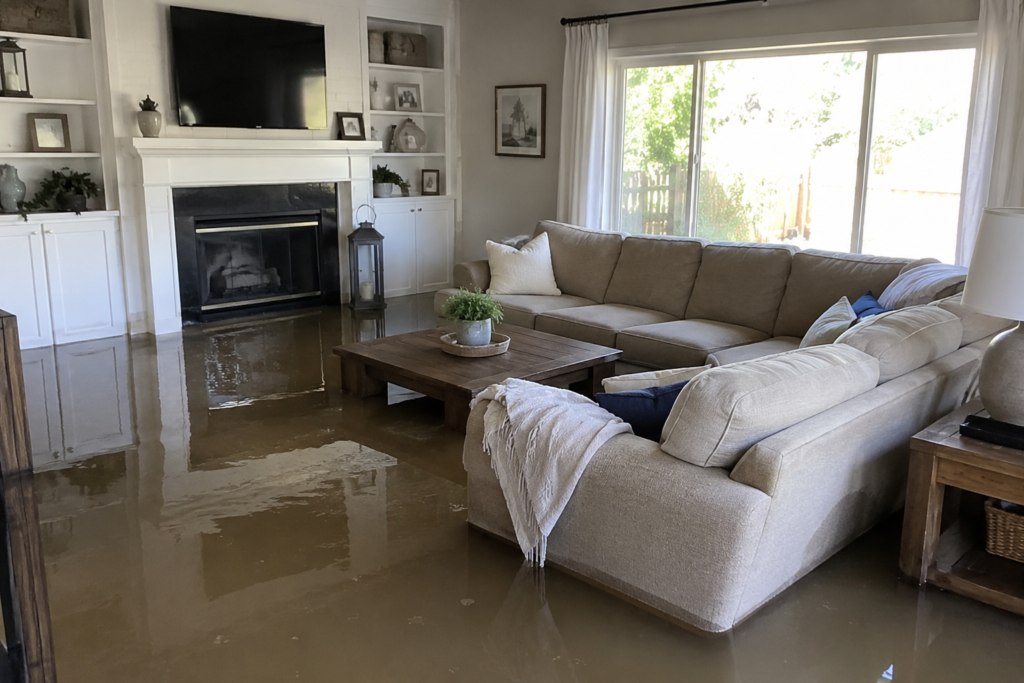
Water damage does not wait. Whether you’re dealing with a burst pipe, basement flooding in Boise, ID, a flooded basement after heavy rain, or an overflowing appliance, the first 24 hours are critical. Fast water damage cleanup in Boise can help limit damage to flooring, drywall, belongings and other parts of the property.
This guide walks you through exactly what needs to happen, step by step, so you are not guessing when everything feels chaotic – whether you are dealing with house water damage from a single burst fixture, basement flooding cleanup in Boise, ID, or a full basement flood cleanup after heavy rain.
Hour 1 to 3 – Stop the Source and Stay Safe
The very first thing is to stop water from coming in if it is still flowing. If it is a broken pipe, shut off the main water supply. If it is coming from an overflowing appliance like a dishwasher or washing machine, unplug the unit and turn off the water line behind it. If it is stormwater or flooding from outside, there is not always something you can do immediately to stop it, but you can start moving belongings to higher ground.
If the source turns out to be a water main break rather than an interior pipe, the fix is not something you can do yourself. A water main break usually means water pooling near the street, a sudden drop in water pressure, or water surfacing in your yard or under your foundation. In that case, the city or your local water utility is who to call for a water main break, not a restoration crew – but once the main is shut down and water has already entered your home, that is exactly when burst pipe water cleanup in Boise becomes urgent, because standing water does not wait for the utility company to finish repairs.
What Water Damage Cleanup Actually Involves
Water damage cleanup is not a single step – it is a sequence that has to happen in the right order to actually work. Extraction comes first, removing standing water as fast as possible.
Drying comes next, using commercial air movers and dehumidifiers rather than household fans, because materials that stay damp for more than a day or two start to break down structurally.
Moisture mapping follows, checking walls, flooring, and ceilings that look dry on the surface but are still holding water underneath.
Skipping any one of these steps is why some water damage cleanup jobs end up needing mold remediation a few weeks later, even after the visible water is gone. A proper water damage cleanup treats the whole affected area – not just what’s visible – as part of the job.
Before you walk into the affected area, check the following:
Is there any standing water near electrical outlets or panels? If yes, do not enter until power to that section of the home is turned off. Water and active electricity together cause electrocution – this is not a risk worth taking.
Are there any signs the ceiling is sagging? A ceiling full of water can collapse. Press gently on a low point with a broom handle if you need to drain it, but stay out from directly underneath.
Is there a sewage smell? If the water looks brown or dark and smells foul, it likely contains contamination from sewage or drain backup. This water is a health hazard and requires proper protective gear before handling – see the sewage cleanup section further down for what changes when this is the case.
Hour 3 to 6 – Document Everything Before You Touch Anything
Once it is safe to move through the space, document everything with your phone before moving or removing anything. Take wide shots of each room, then close-up photos of the walls at the floor line, baseboards, furniture legs, flooring, and any visible damage to cabinets or drywall.
This documentation matters for two reasons. First, your homeowner’s insurance will ask for it. Second, a professional water damage cleanup company can use photos to assess the extent of spread and determine where hidden moisture likely traveled inside walls or under subfloor.
Boise homes, particularly in areas like Dry Creek Ranch, Morris Hill, and Boise Heights, often have slab foundations or older crawl spaces that hold moisture in ways that are not obvious from walking the floor. Photos help a restoration crew know where to begin, whether the job is a small water damage repair or a full flood damage cleanup.
Hour 6 to 12 – Begin Water Extraction If Possible
If the volume of water is manageable, you can begin removing it with a wet/dry vacuum or mop. The goal is to reduce standing water as fast as possible. Every hour water sits on flooring, it pushes deeper into the subfloor, into wall cavities, and under cabinets. Hardwood floors begin to warp. Drywall begins to absorb. Mold spores, which are present on almost every surface, need only 24 to 48 hours of moisture to activate and begin colonizing.
For most residential water damage scenarios in Boise, a household wet/dry vac is not enough. When standing water covers a large area, emergency water removal in Boise, ID may require commercial extraction equipment to remove water quickly. This is especially important when dealing with basement flooding cleanup, where water can spread into flooring, walls and other materials below grade.
This is especially important after basement flooding, when water can spread into flooring, walls and other materials below grade. Calling a professional emergency water cleanup team is not just convenient, it can help prevent a larger problem.
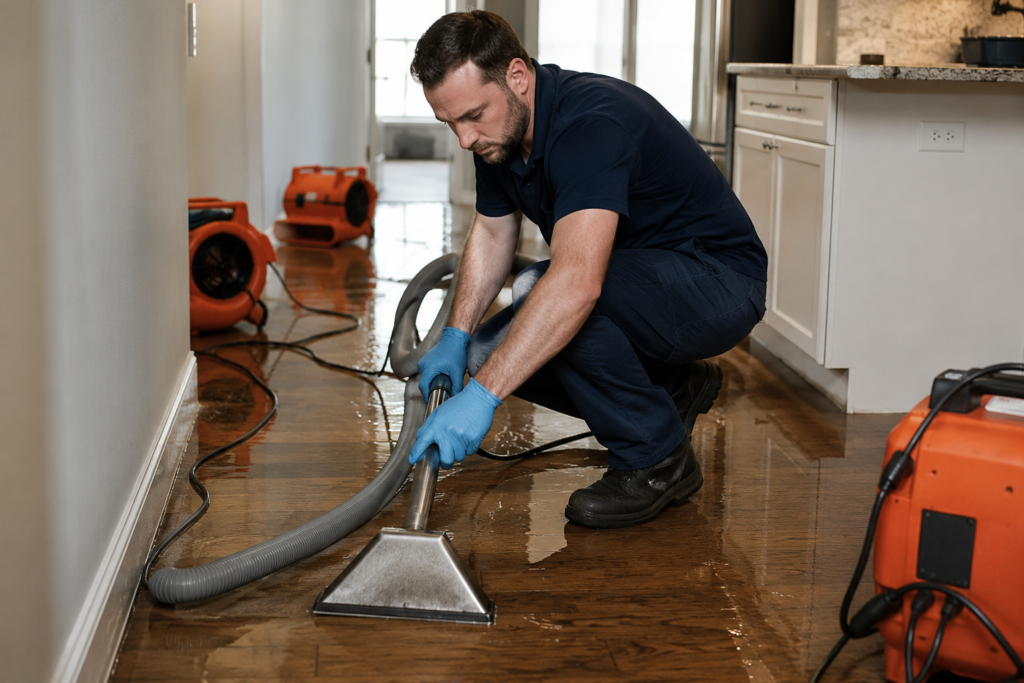
Our 24-hour Water Damage cleanup service in Boise is designed specifically for this window. Crews can be on-site with truck-mounted extraction units, industrial air movers, and commercial dehumidifiers before the moisture has had time to penetrate fully into your structure. This is also what people mean when they search for 24 hour emergency water damage restoration in Boise – a crew that shows up the same hour you call, not the next business day.
Hour 12 to 24 – Drying, Monitoring, and Mold Prevention
After extraction, the drying phase begins. Air movers and dehumidifiers need to run continuously – this is not something you can accomplish with household box fans. Professional drying equipment moves hundreds of cubic feet of air per minute and pulls moisture out of materials at a rate that prevents secondary damage.
A key step that homeowners often skip is moisture mapping. Using a moisture meter, a technician checks walls, flooring, and ceiling areas that may not look wet but are holding water inside. In Boise, this matters especially in older homes where fiberglass insulation in walls can hold moisture for weeks without any visible sign on the surface.
Mold is the silent risk in every water damage event. Boise’s climate is drier than coastal cities, but indoors, a water-damaged room creates its own microclimate. If drying does not happen within the first 24 to 48 hours, mold remediation becomes part of the job – and that adds time, cost, and health risk for your household.
Even after visible water is removed, moisture can remain inside drywall, insulation, and flooring. This guide to mold growth after water damage explains common warning signs and why thorough drying matters.
Basement Flooding Cleanup in Boise, ID: What Changes Underground
A flooded basement behaves differently from a flooded main-floor room, and basement flooding cleanup in Boise, ID often requires a faster and more thorough response. If you’re searching for flooded basement cleanup in Boise, ID or basement flood cleanup, the priority is to remove standing water quickly and dry the affected structure completely.
Basements sit below grade, so water can enter through foundation cracks, window wells, heavy rain, or a failed sump pump rather than all at once. Homeowners may not realize flooded basement cleanup is needed until carpet, drywall, or other materials begin showing signs of moisture or musty odors.
If you are dealing with basement flood cleanup in Boise, ID, flooded basement cleanup near you, or basement flooding clean up in Boise, the priority order is the same as anywhere else in the home: stop the source, extract standing water, then dry the space fully, including behind finished walls where a basement’s poured concrete can trap moisture. Basement water damage cleanup often requires commercial dehumidification because below-grade spaces do not get natural airflow the way an upstairs room does.
Sewage Backup and Water Abatement: A Different Kind of Emergency
Not every flood is clean water. If a backup, an overwhelmed storm drain, or floodwater from outside has entered your home, you are dealing with contaminated water that requires water abatement procedures beyond standard extraction. Sewage cleanup in Boise involves treating every porous material that water touched – carpet, padding, drywall below the flood line, insulation – as contaminated, since these materials cannot simply be dried and reused.
This is where water remediation becomes a more involved process than a typical water damage cleanup. Crews wear protective equipment, remove and dispose of contaminated materials properly, and apply antimicrobial treatment to structural surfaces before drying begins.
What About Flood Damage Specifically?
Flooding events – whether from stormwater, a backed-up storm drain, heavy rain, or overflow from a nearby waterway – carry additional risks.
The water may contain bacteria, chemicals, and contaminants from outside. Everything that absorbs that water must be assessed and, when necessary, treated as contaminated, including carpet, padding, drywall below the flood line, insulation, and porous furniture. Professional flood damage cleanup in Boise helps address these materials safely while reducing the risk of further water damage.
Our flood damage restoration process handles all of this, including proper disposal of contaminated materials and antimicrobial treatment of structural surfaces before drying begins. Whether you found us searching for flood damage repair, a flood damage repair company in Boise, ID, or simply flood cleanup services in Boise, this is the process your home goes through from arrival to final drying.
Common Questions We Get About Water Damage Cleanup in Boise, ID
1 . Do you offer 24/7 water damage restoration in Boise?
Ans : Yes. Water and flood emergencies do not happen on a schedule, so our crews are available around the clock for emergency water removal and cleanup and water restoration across Boise
2. What is the difference between water removal and water mitigation?
Ans : Water removal is the physical extraction of standing water. Water mitigation is the broader process – extraction, drying, moisture mapping, and mold prevention – aimed at stopping further damage before repairs begin.
3. How fast can a crew reach me for basement flooding cleanup or flood damage cleanup in Boise, ID?
Ans : For most homes inside our service area, response time is under an hour once you call. Fast response is especially important for basement flooding cleanup in Boise, ID, because standing water can continue affecting flooring, drywall and other materials while it remains in the property. Prompt water damage repair can help limit further damage and reduce the risk of a total loss.
4. Are there water damage cleanup companies in Boise, ID that also handle sewage?
Ans : Yes, but confirm this before hiring – general water damage repair and contaminated water cleanup require different equipment and certifications, and not every company that handles clean-water losses is equipped for sewage.
If You Do Nothing Else, Do This
Contact a professional water damage cleanup company within the first few hours if the affected area is more than a bathroom or small section of a room.
The cost of professional water damage restoration is almost always less than the cost of replacing flooring, drywall, and dealing with mold three months later.
We serve Boise and the surrounding areas including Garden City, Hillcrest, Dry Creek Ranch, Morris Hill, Boise Heights, Franklin, and more. Our team is available around the clock because water damage does not happen during business hours.
If you are dealing with water damage, basement flooding, or a flooded basement in Boise, don’t wait to see if it dries out on its own. Contact our Boise water damage restoration team for immediate assessment, professional water removal, water extraction and structural drying.
Call us now at (986) 205-4048 – we are available 24 hours a day, 7 days a week for emergency water damage response in Boise and surrounding areas.
Leave a Reply