
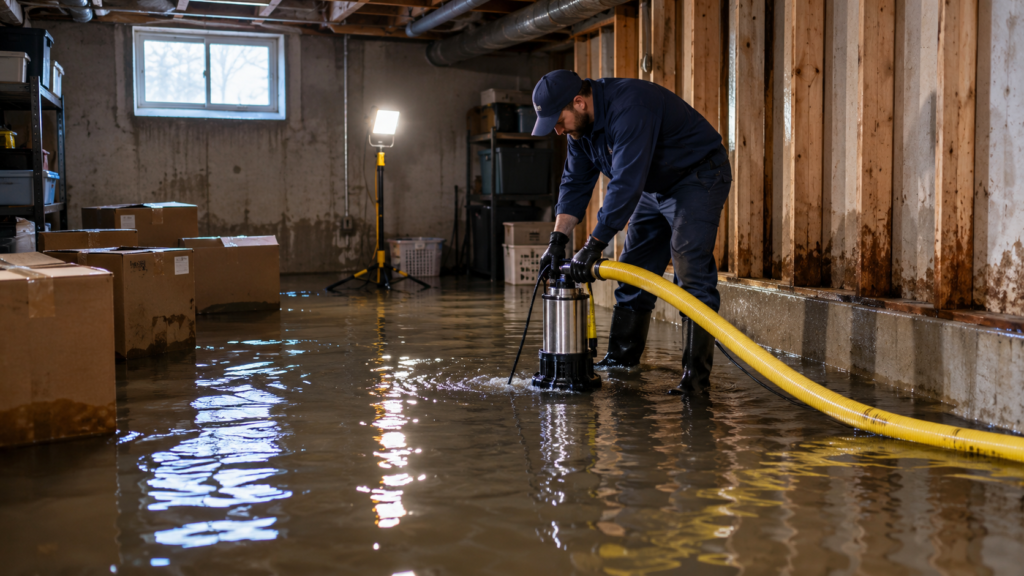
You go downstairs to grab something from storage and your shoes make that unmistakable squelch. An inch of water is spread across the floor, soaking into boxes, the carpet edge, maybe the bottom of the drywall. Your first thought is probably “how do I get this water out.” Your second thought should be “how fast does this turn into a mold problem.”
That second question matters more than most Boise homeowners realize, and it’s the one that decides whether you’re dealing with a simple cleanup or a full remediation project a few weeks later.
Why Basements Are Mold’s Favorite Starting Point
Basements and crawl spaces stay darker, cooler, and more humid than the rest of the house almost by design. Add standing water or a damp concrete slab, and you’ve built the exact environment mold needs. According to the U.S. Environmental Protection Agency, controlling indoor moisture is the key factor in controlling mold growth, since mold simply cannot establish itself on a surface that stays dry.
In the Treasure Valley, this plays out in a specific way. Spring snowmelt pushes groundwater against older foundations, especially in neighborhoods like Boise Bench and the North End where homes were built decades before modern waterproofing codes existed. If you want the bigger weather picture behind this, our breakdown of rainfall and snowfall patterns in Boise, Idaho explains why certain months bring more basement calls than others.
The Real Timeline: What Happens Hour by Hour
0–24 Hours: The Window Where You Still Have Control
Right after a flood, water is sitting on the surface, visible and removable. This is the stage where fast flooded basement cleanup makes the biggest difference. Pumping out standing water and starting air movement within the first day gives you the best odds of avoiding mold entirely.
24–48 Hours: Mold’s Preferred Starting Point
This is the window every restoration professional watches closely. The EPA states plainly that materials should be dried within 24 to 48 hours of a water event to prevent microbial growth. Past this point, drywall paper, wood framing, and carpet padding have usually absorbed enough moisture to become a food source for mold spores that are already present in the air.
48–96 Hours: Visible Growth Begins
If moisture is still trapped behind baseboards or under flooring at this stage, you’ll often start noticing a musty smell before you see anything. That smell is usually your first real warning sign, and it means mold has likely started colonizing somewhere you can’t see yet.
5+ Days: Remediation, Not Just Cleanup
Past the first week, what started as a water problem becomes a mold problem. At this point, extraction and drying alone won’t solve it. You need containment, removal of affected materials, and in many cases, mold remediation services to bring the space back to a safe condition.
Why “It Looks Dry” Doesn’t Mean It’s Safe
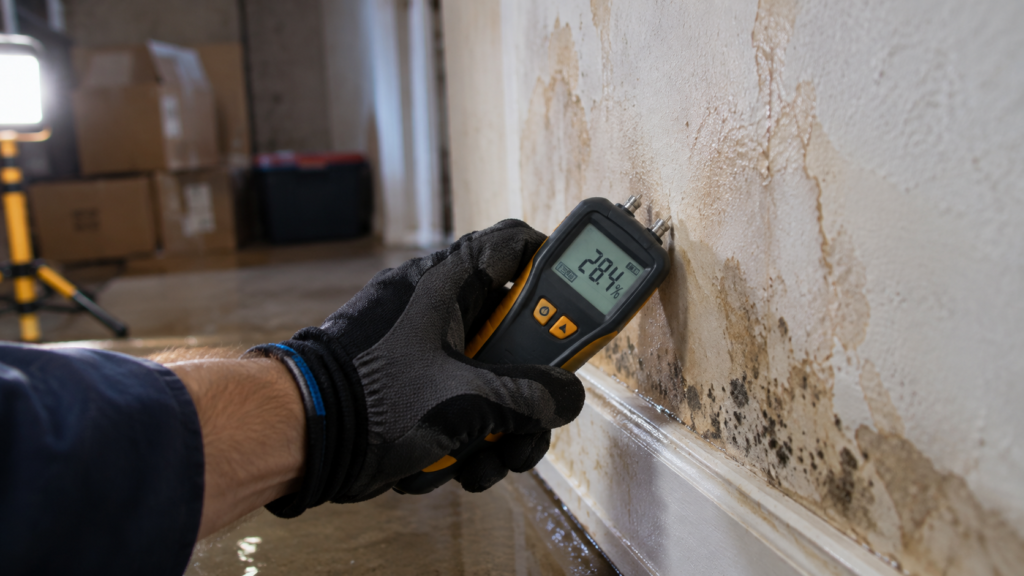
This is the mistake that costs Boise homeowners the most. Concrete basement floors and foundation walls can feel dry to the touch while still holding moisture well below the surface. Idaho’s low humidity outdoors actually works against you here, because it tricks people into thinking a space has dried faster than it has.
Professional technicians use moisture meters to check what’s happening inside the material, not just on top of it. If you’ve never had this done, our guide on what to expect during a water damage inspection in Boise walks through exactly how that process works and why it catches problems a visual check misses.
Humidity Is the Silent Second Cause
Not every basement mold problem starts with a flood. Sometimes it’s just ongoing humidity from poor ventilation or a crawl space with no vapor barrier. The EPA recommends keeping indoor humidity between 30 and 50 percent, and notes that levels staying above that range create the conditions mold needs over time, even without a single flooding event.
This is why so many Boise basements develop mold slowly, months after a minor leak that nobody thought was serious enough to call about. If your basement consistently feels damp or smells off, it’s worth having it checked before it becomes a bigger issue. Our foundation waterproofing page covers the long-term fix for homes with this kind of recurring moisture problem.
What a Flooded Basement Actually Costs If You Wait
Here’s the part most people don’t think about until it’s too late. A basement pumped out and dried within 48 hours is usually a water mitigation job, sometimes covered fully by insurance if documented properly. The same basement left wet for a week becomes a mold remediation job, which costs significantly more and often means removing drywall, insulation, and flooring that could have been saved.
Acting fast isn’t just about avoiding health risks. It’s the single biggest factor in keeping your repair bill from multiplying.
Common Mistakes We See in Boise Homes
Running a single fan and calling it done. One fan moves air across the surface. It does nothing for moisture trapped in framing or under carpet padding.
Painting over a musty wall. Paint doesn’t kill mold or fix moisture. It just hides the problem until it comes back, usually worse.
Ignoring a crawl space because “nobody goes down there.” Moisture in a crawl space travels upward into the living space through the stack effect. A problem you never see can still be affecting the air you breathe upstairs.
Assuming small mold patches aren’t worth a call. Small patches grow. What starts as a spot the size of a dinner plate can spread across a wall within a couple of weeks if the moisture source isn’t addressed.
When to Call a Professional
If your basement has flooded and water sat for more than a day, if you notice a musty smell that wasn’t there before, or if you see any discoloration on drywall, baseboards, or stored belongings, it’s time to get it checked. A proper basement water damage repair starts with finding and fixing the moisture source, not just treating the symptoms.
Want to know more about who handles this kind of work in Boise and how we approach it? Our about us page covers our background, and you can reach our team directly if you’d like to talk through what you’re seeing.
Final Thoughts
A flooded basement feels like a one-time inconvenience, but the mold risk that follows is a slow-moving problem with a very specific window to prevent it. The first 24 to 48 hours decide almost everything. Act in that window, and you’re usually looking at a straightforward dry-out. Miss it, and you’re looking at remediation, higher costs, and a longer timeline to get your space back to normal.
If your basement has standing water right now, don’t wait to see what happens. The clock is already running.
Leave a Reply