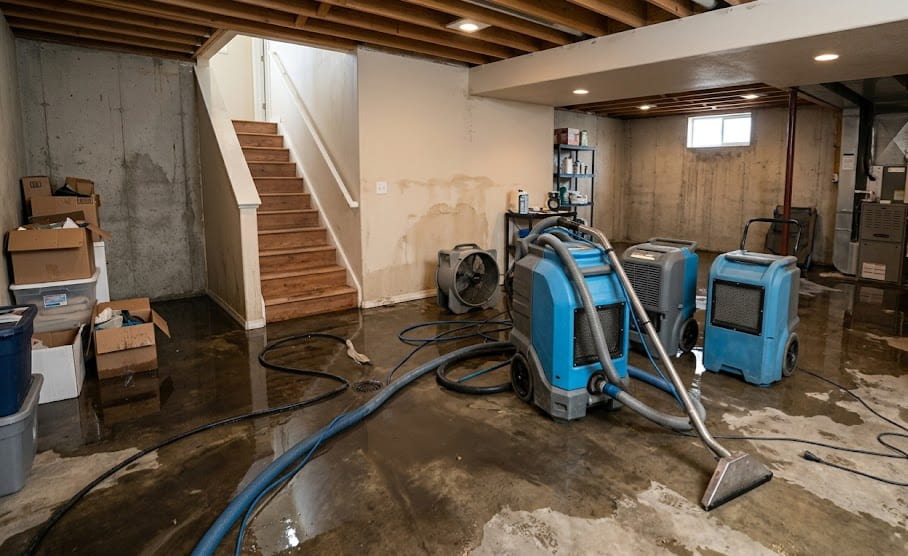
A wet-dry vac and a few towels will handle a spilled bucket. They will not handle what a burst pipe does to a Boise basement at 2 a.m.
This guide explains how water extraction works in Boise, ID, what equipment is involved, how it differs from a DIY cleanup and what to do in the first minutes while you wait for help.
What Is Water Extraction?
Water extraction is the first stage of water damage restoration: removing standing water and the water soaked into carpet, padding and flooring before it spreads further into the structure. Everything that comes after, including drying, cleaning and repairs, depends on how quickly and completely this step is done.
The process usually follows this order:
- Assessment: Finding the source of the water, how far it has traveled and which materials are affected.
- Bulk removal: Submersible pumps clear deeper standing water, then extraction units pull water out of carpet and flooring.
- Moisture checks: Meters help find water that remains inside walls and under floors after the visible water is gone.
- Handoff to drying: Once the water is out, the structure still holds moisture, which is where structural drying and dehumidification comes in.
What Equipment Is Used in Water Extraction?
Different tools handle different parts of the job:
- Submersible pumps remove deeper standing water from basements and flooded rooms.
- Extraction wands and units pull water out of carpet, padding and hard floors.
- Wet-dry vacuums handle smaller areas, corners and stairs.
- Moisture meters show whether materials are still wet after the visible water is gone.
Dehumidifiers and air movers are drying tools, not extraction tools. They remove moisture from the air and materials after the water itself has been pumped or vacuumed out, and that is a separate stage.
Not All Water Is the Same
Extraction does not look the same for every job, because the type of water changes how it has to be handled.
Clean water comes from a supply line or an overflowing sink and is the simplest to remove. Gray water comes from sources like a washing machine or dishwasher and carries some contamination. Black water comes from sewage or a flooded river and carries serious health risks, so it needs protective equipment, containment and disinfection, not just a vacuum. Water that starts out clean can also become contaminated if it sits and soaks through dirty materials, which is one reason timing matters.
Why Water Extraction Matters in Boise
Boise is a semi-arid city, but water damage still follows the seasons. Spring snowmelt and heavy rain can push water toward foundations. Pipes that freeze in winter can split open and release water when they thaw. And a summer thunderstorm can drop more rain in an hour than drainage was built to handle.
Local terrain matters too. Homes on slopes, such as parts of Boise Heights, can see water collect against a foundation or run toward lower rooms faster than homes on flat ground. Crawl spaces are another common problem, since water under a house can sit unnoticed for days, and a dedicated crawlspace water extraction approach is usually needed for tight, low spaces.
Mold can begin growing in damp materials within 24 to 48 hours, which is why even a “small” leak is worth taking seriously. Our first 48 hours guide walks through that window in more detail.
What to Do While You Wait for Help
If water is already in your home, these steps are safe for most people to take:
- Make the area safe. Stay out of standing water if outlets, appliances or cords may be involved, and have power to the area turned off by someone who can do it safely. FEMA’s guidance on returning to a flooded home covers electrical and contamination precautions.
- Stop the source if you can. For a burst pipe, close the main water shutoff.
- Take photos and video before moving anything. You will need them for an insurance claim.
- Lift what you can. Pull up rugs, move furniture and raise small valuables off wet floors. On hardwood, getting items off the surface quickly helps limit staining and cupping.
- Tackle only small amounts yourself. A wet-dry vac works for a minor spill. For anything larger, extraction needs stronger equipment.
Water Extraction vs. Full Restoration
Extraction removes the water. Restoration covers everything that follows: drying, cleaning, disinfecting, mold prevention and rebuilding what was damaged. Some jobs end after extraction and drying, while larger ones, such as a flooded basement or storm water in the main living area, need the full process. For those situations, flood damage cleanup explains how restoration builds on extraction.
Common Mistakes Homeowners Make
- Skipping the source. If the leak is still running, extraction only buys time. Find and stop the source first.
- Drying with fans only. Fans without dehumidification push moist air around and can trap humidity in the space.
- Stopping when the surface feels dry. Water often stays inside walls, under flooring and in insulation. Moisture readings, not touch, tell you when materials are really dry.
- Waiting too long. The longer water sits, the more it spreads and the more material may have to be replaced instead of dried.
- Handling contaminated water without protection. Gray or black water carries health risks and should not be cleaned up with household tools.
What to Look for in a Water Removal Company
If you decide to call in help, these questions separate thorough work from a quick pass:
- Do they identify the type of water before starting?
- Do they take moisture readings and share them with you?
- Do they document the damage with photos for your insurance claim?
- Are they licensed and insured in Idaho?
- Can they respond day or night, including weekends?
If the water is already inside and spreading, emergency water extraction is the fastest way to stop it.
Frequently Asked Questions
How does water extraction work?
Technicians find the source, then use pumps and extraction units to remove standing water and water from carpet and flooring, and check moisture levels before drying begins.
How long does water extraction take?
It depends on how much water there is and how many rooms are affected. Removing standing water often takes a few hours for a typical home, and drying afterward usually takes several days.
Can I do water extraction myself?
For a small spill, yes. For anything larger than a few gallons, or involving carpet padding, hidden moisture or contaminated water, professional equipment is far more reliable.
What is the difference between water extraction and water removal?
The terms are often used interchangeably. Both refer to taking standing water out of a property, and both are followed by drying.
Does insurance cover water extraction?
Many policies cover sudden events such as burst pipes and appliance failures, but not long-term leaks or certain types of outside flooding. Check your policy and keep photos, receipts and written records.
Wrapping Up
Water extraction is the step that decides how big the rest of the job will be. Acting quickly, stopping the source and getting water out before it soaks into the structure limits damage in homes across Boise, whether you are in Garden City, Franklin, Somerset or near the foothills.
Leave a Reply